Words by Siobhan Forbes, host at DSTNTN Yarra Valley
Watching a fire is an exercise in unforced attention, and one of the simplest ways to reconnect with nature. There is no need to analyse the smoke patterns or measure the heat; the senses simply take it in. We notice the movement, feel the warmth, hear the crackle. Something in our biology settles.
We experience the world through our senses, yet much of modern life is organised around what we think, process and produce. We analyse, interpret, measure and make sense of things, often overlooking the extraordinary amount of information and intelligence available to us before conscious thought even begins. Moments like this are increasingly rare.
The cost of a compartmentalised life
Modern life is often managed by carving days into small, separate compartments, tracking efficiency and measuring outputs. It is a framework that keeps things moving, but it can come at a quiet, considerable cost. We have come to treat our minds like processors to be optimised, forgetting that a full life operates through interrelationships, not compartments. Managing many parts in isolation brings a particular kind of exhaustion.
What starlings and forests know about connection
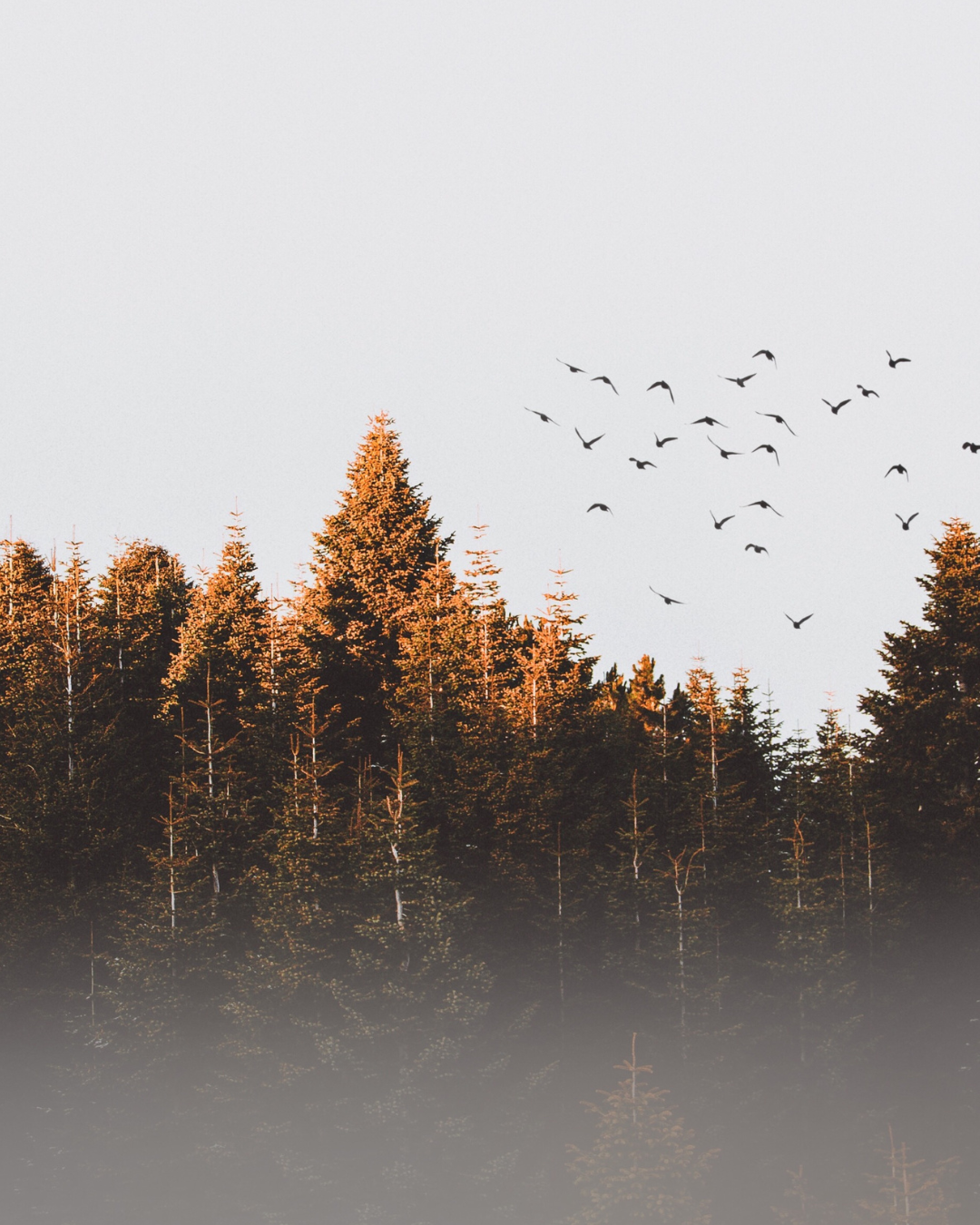
Consider a starling murmuration. Thousands of birds sweep across the sky, contracting and expanding in formations too fluid for any centralised command. There is no single leader directing the dance. Instead, each bird responds to the movements of its closest neighbours, making constant adjustments in real time. From countless small interactions, an extraordinarily sophisticated pattern emerges. This is a different kind of intelligence: relational, responsive and entirely innate.
We see a similar interconnectedness beneath the forest floor. In mature forests, trees are connected through intricate networks of roots and fungi, through which resources and chemical signals pass. The forest is not simply a collection of individual trees. It is a complex, interdependent system in which life is sustained through connection.
We are relational beings
At its core, human capability has something in common with these natural systems. We, too, are relational beings, shaped by our connections and environment, and equipped with capacities that extend well beyond conscious thought and analysis.
The smell of wet earth after a hot afternoon, the sharp intake of cold winter air, or that sudden, visceral flash of intuition that tells us exactly what to do long before the conscious mind has assembled the evidence to explain it.
These innate human capacities — instinct, empathy, perception and the ability to navigate the subtle, unspoken dynamics of a room — remain entirely intact. Yet they can become difficult to access beneath the noise and constant demands of a hyper world.
Why a change of place helps us reconnect with nature
In my work, the focus is on helping people untangle themselves from this noise and reconnect with these capacities: to better understand their innate strengths, trust their instincts and bring greater alignment to the way they live and work. But this kind of inner shifting rarely happens while staring at a screen. Sometimes it requires a physical change of environment, a little distance from the familiar patterns of everyday life.
This is one of the things we love about welcoming people to this landscape in the Yarra Valley. Here, you are in the presence of an ecosystem that knows how to sustain life. The turning of the seasons, the shifts in the weather, and the variety of life unfolding around us operate on dynami cs entirely indifferent to our inboxes.
Attention shifts. People begin to notice things that might otherwise pass unseen: the movement of rabbits, the flight of birds through the trees, the changing shadows and light, the small interactions taking place all around them.
We love sharing this environment because we see what happens when people give themselves the space for their perspective to widen. A deliberate change of place isn’t about escaping reality; it’s an invitation to experience more of it.
How to reconnect with nature, and with ourselves
There is something hopeful in recognising that our connection to the natural world, and to the innate capacities that come with being human, has never really been lost. Sometimes it simply takes a quieter mind, and a place to reconnect with nature and remember how it feels to look inward, then out and up.
Sometimes it really is about the destination.